

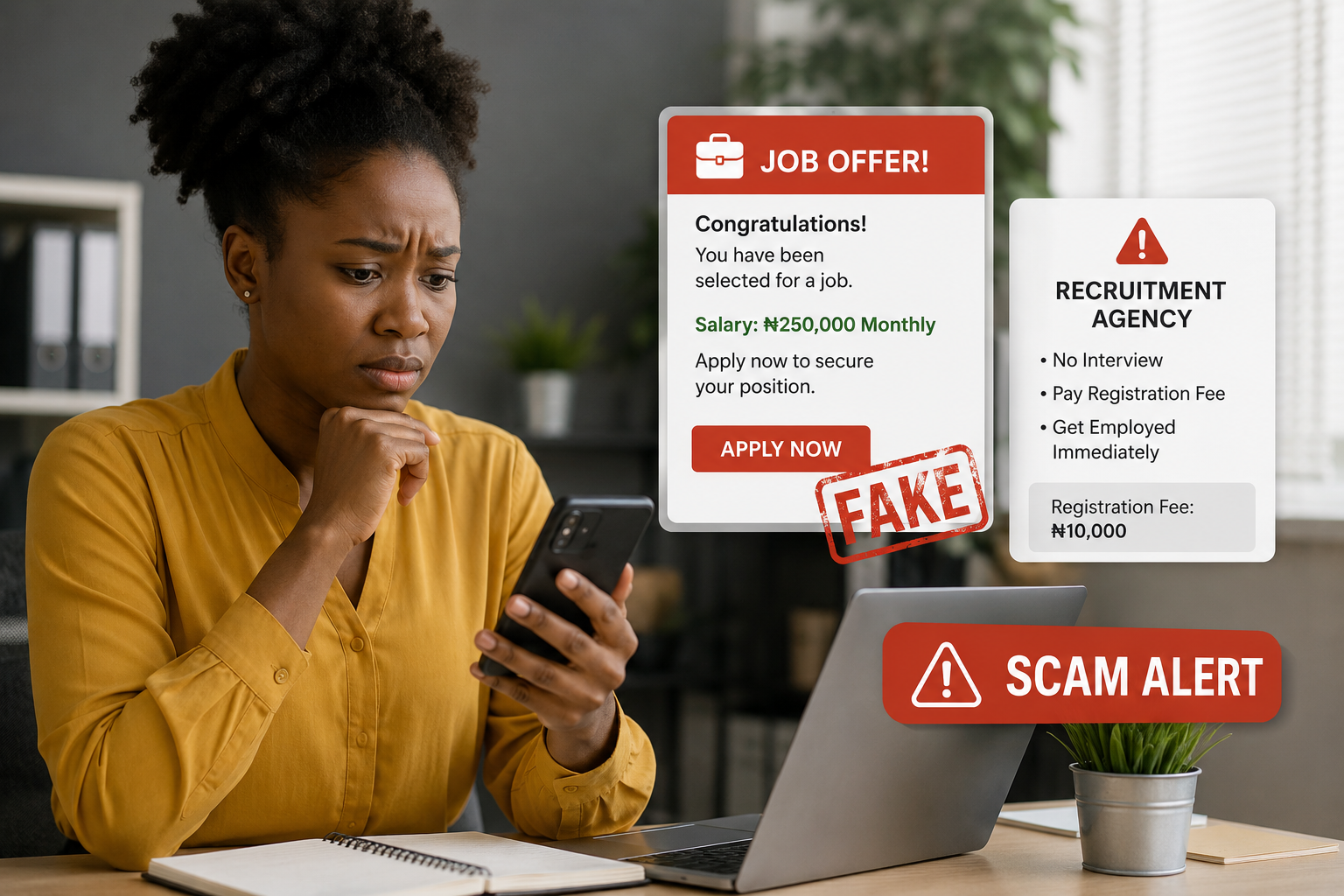
Job hunting in Nigeria can be stressful, and unfortunately, scammers take advantage of desperate job seekers. Fake job offers and recruitment scams are becoming more common, especially on social media, messaging apps, and unofficial websites.
Many people have lost money, personal information, or even their identity because they could not identify a scam job offer early.
This guide will help you understand how to spot fake job offers and recruitment scams in Nigeria, so you can protect yourself and apply only to genuine opportunities.
Why Job Scams Are Increasing in Nigeria
Scammers target job seekers because:
- Many people are actively looking for employment
- Job seekers are often desperate for opportunities
- Social media makes it easy to reach victims
- Fake job ads can look very professional
Knowing how these scams work is your first line of defense.
1. Job Offers That Ask for Money
One of the biggest red flags is any job that requires payment before employment.
Common excuses scammers use:
- “Registration fee”
- “Training fee”
- “Processing fee”
- “Uniform fee”
- “Appointment letter fee”
Truth:
Legitimate employers DO NOT ask job applicants to pay money to get hired.
If a job requires payment, it is most likely a scam.
2. Unrealistic Salary Offers
If a job sounds too good to be true, it probably is.
Examples:
- High salary for no experience
- Immediate employment with huge pay
- Easy work with no skills required
Warning Sign:
Scammers use attractive salaries to lure victims quickly.
3. Poorly Written Job Advertisements
Fake job posts often contain:
- Spelling mistakes
- Poor grammar
- Unclear job descriptions
- Missing company details
Why It Matters:
Real companies usually have professional HR teams that write clear job descriptions.
4. No Official Company Information
Always check if the company is real.
Red Flags:
- No website
- No physical address
- No official email domain (e.g. Gmail or Yahoo only)
- No social media presence
Example:
A company emailing from “hrcompany123@gmail.com” instead of an official domain is suspicious.
5. Urgent or Pressure Tactics
Scammers often pressure victims to act quickly.
Examples:
- “Apply within 24 hours”
- “Limited slots available”
- “First come, first served”
- “You must pay today to secure your spot”
Why It’s Dangerous:
Legitimate recruitment processes do not rush candidates like this.
6. Interviews Conducted Only on Messaging Apps
Be careful if interviews are conducted only via:
- Telegram
- Facebook Messenger
Warning Sign:
Real companies usually conduct interviews through:
- Physical offices
- Zoom or Google Meet
- Official HR channels
7. Fake Recruitment Agencies
Some scammers pretend to be recruitment agencies.
How to Spot Them:
- No registration details
- No verifiable office location
- No online reviews
- Asking for payment upfront
Safety Tip:
Always verify recruitment agencies through official records or trusted job platforms.
8. Suspicious Email Domains and Links
Be careful with emails and links sent to you.
Examples:
- Random URLs that don’t match company names
- Shortened links (bit.ly, tinyurl) without explanation
- Emails from personal accounts instead of company domains
What to Do:
Never click suspicious links without verifying first.
9. No Interview or Screening Process
If you are offered a job immediately without:
- Interview
- Skill test
- Background check
Warning:
This is a strong sign of a scam.
Real employers want to assess candidates properly.
10. Requests for Personal or Bank Details Too Early
Be careful if a recruiter asks for:
- Bank account details
- BVN
- ID cards
- Passport photos (before official onboarding)
Why It’s Risky:
Scammers can use your information for fraud or identity theft.
How to Verify a Legitimate Job Offer
Before applying or accepting any job:
1. Research the Company
Check:
- Website
- LinkedIn page
- Google reviews
2. Confirm Contact Information
Real companies use official emails like:
name@company.com
3. Search for Reviews
Look for feedback from other employees or job seekers.
4. Visit the Office (if possible)
Physical presence increases credibility.
5. Use Trusted Job Platforms
Apply through verified job boards instead of random social media posts.
What to Do If You Suspect a Scam
If you suspect a fake job offer:
- Do not send money
- Do not share personal details
- Block the contact
- Report the scam to relevant platforms
- Warn others if possible
Tips to Stay Safe While Job Hunting
- Always stay cautious
- Trust your instincts
- Never rush into decisions
- Verify before applying
- Use reputable job platforms
Final Thoughts
Job scams are becoming more sophisticated, but with the right knowledge, you can easily protect yourself. Always remember that real employers will never ask you to pay for employment, and legitimate opportunities follow a clear, professional hiring process.
Staying informed is your best protection in today’s job market.
At MadeInNigeria Job Board, we are committed to helping job seekers find genuine opportunities, avoid scams, and connect safely with trusted employers across Nigeria.